
I finally stopped talking about building a homelab and actually started doing it. The first piece was turning a small HP thin client into an OPNsense router. It has been a fun way to finally take control of the network instead of just accepting whatever default box the ISP hands over.
That kicked off the next project: putting together a small TrueNAS box with parts I already had sitting around. I ended up grabbing a Jonsbo N3 for the case, which felt like the right kind of compact NAS build instead of another random pile of parts on my desk.
Current hardware
- Router box: HP T620 Plus thin client, GX-420CA, 8 GB RAM, 64 GB storage, Intel 4-port gigabit NIC
- Internet setup: Quantum Fiber 1 GB with the ISP gear in bridge mode
- Switch: Linksys SE3008 8-port gigabit switch
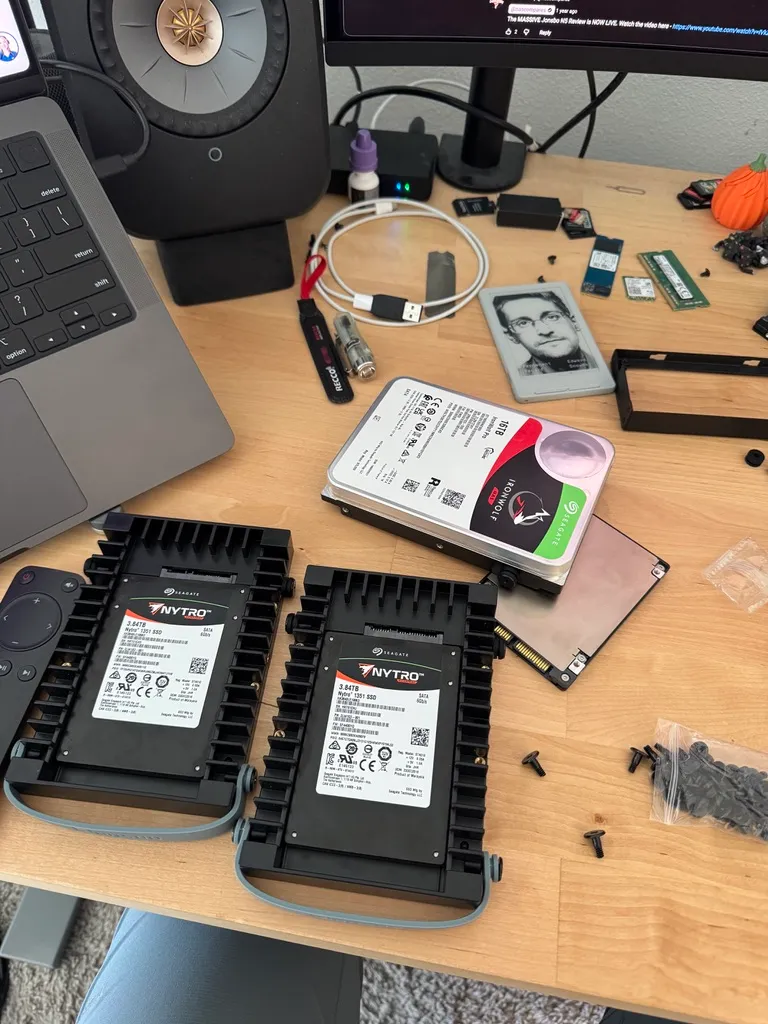
- NAS build: i7-7700K, 16 GB RAM, 16 TB IronWolf drive
- Case: Jonsbo N3
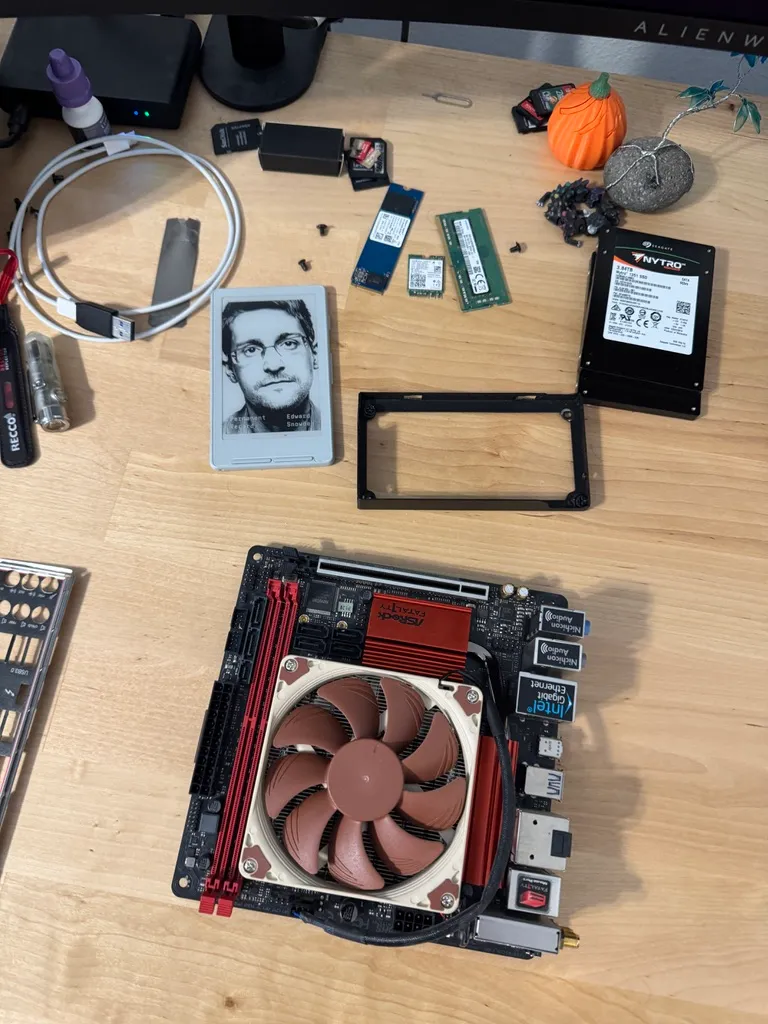
I also lucked out and found four used 4 TB Seagate Nytro SATA SSDs on Marketplace for a great price, which made the whole thing way more fun to finish. It finally feels like the home lab is becoming more than just a NAS and router.
What I have installed
- Pi-hole for network-wide ad blocking
- Plex for media
- SearXNG for private metasearch
- Pinchflat for YouTube downloads that can show up in Plex
- Caddy for local domain management
The next step is probably using NGINX Proxy Manager to handle local SSL certificates a bit more cleanly, and then building another box for Proxmox so I can branch out into more services and VMs without cramming everything onto the NAS.
What I want to try next
- Upgrade the network to 2.5 Gb or even 10 Gb
- Add a managed switch so I can start playing with VLANs
- NGINX Proxy Manager for easier local SSL certificate and reverse proxy management
- Proxmox for running more services and VMs on a separate server
- Hoarder for bookmarking and saving links
- Glance for a clean self-hosted dashboard
- Immich for photo backup and management
- Nextcloud for files, sync, and collaboration
- Home Assistant for home automation
- Grafana for metrics and dashboards
This whole thing started as a router upgrade and somehow turned into a long list of weekend projects, which is probably how you know it is working.